How to Stop Your Dog Jumping on People
A calm, reward-based way to stop your dog jumping on people at the door — plus how breed, age, and energy change the plan, and what to fix when it stalls.
The doorbell goes, and your dog goes vertical — paws on chests, muddy prints on a visitor’s coat, the whole hello lost in chaos. You’ve said “off” a hundred times and it hasn’t stuck. It’s not defiance, and you’re not doing it wrong.
Here’s the good news: jumping is one of the most fixable greeting problems, because the fix is simple and consistent rather than complicated. The rule your dog needs to learn is that four paws on the floor is what earns the greeting — and jumping makes the fun person go still and boring.
This guide walks through why your dog jumps, the exact method to teach the new habit, how to practice it with real visitors, and what to change when it stalls. All reward-based — no scolding, no kneeing, no leash jerks.
Why your dog jumps on people
Jumping is almost always a friendly behavior gone big. From your dog’s point of view, faces are up high, and getting close to a face is the whole point of a greeting. Jumping is how they try to reach it.
- It’s been accidentally rewarded. Every time someone pushed the dog off, laughed, made eye contact, or said “no” in an excited voice, that was attention — and attention is exactly what the dog wanted. Even negative reactions can feed the habit.
- Big feelings, no outlet. Arrivals are the most exciting moment of the day for many dogs. A body full of excitement and no trained alternative comes out as launching.
- Social, eager breeds do it most. Golden and Labrador Retrievers are classic jumpers — bred to work closely with people, they greet with their whole body. Boxers, German Shepherds, and other high-drive dogs are right there too.

- Puppies vs adults. Puppies jump because nobody’s taught them not to yet, and because it’s adorable at 9 pounds so it gets rewarded. That same habit at 70 pounds is a different story — which is why teaching four-on-the-floor early saves you a hard re-training job later.
Before you start
You don’t need much, but you do need everyone on side.
- Small, soft treats your dog loves — pea-sized, so you can deliver several fast.
- A lead and/or a baby gate to manage the door while your dog is still learning. Management stops the old habit getting rehearsed.
- A quiet room for the first sessions, before you add the excitement of real arrivals.
- The one rule that makes it work: everyone greets the same way, every time. If you ignore jumping but your partner ruffles the dog’s ears mid-jump, your dog learns that jumping sometimes works — and “sometimes” is the hardest habit to break. Brief every family member and every visitor.
Jumping earns nothing; four paws on the floor earns the hello. Keep that consistent and the behavior fades on its own.
The method, step by step
Start indoors with a calm, familiar person before you try it with an exciting guest.
- Set the greeting up on your terms. Put your dog on a lead or behind a gate near the door. Have your helper ready and your treats within reach.
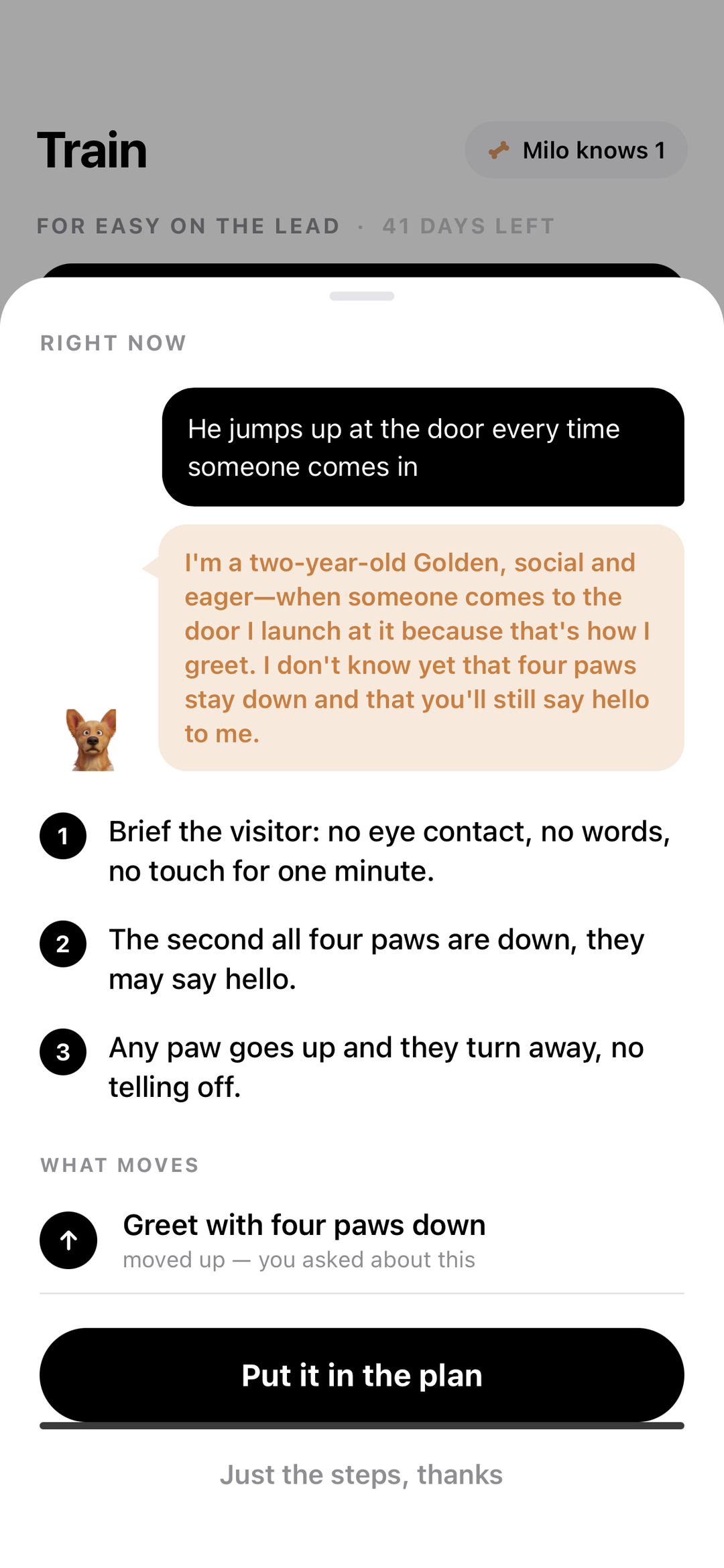
- The person becomes boring the instant paws leave the floor. No eye contact, no words, no touch. Just turn slightly away and wait. Nothing about jumping should be interesting.
- The second all four paws are down, the greeting arrives. Your helper turns back, says a calm hello, and you mark it — a quiet “yes” — and reward at the dog’s chest height (low, so you’re not luring them back up).
- Reward an incompatible behavior. A dog who is sitting or standing with four on the floor can’t jump. Cue a sit as the person approaches, and pay it well. Over time the sit becomes your dog’s default “hello.”
- If a paw comes up, the person turns away again. No telling off, no pushing — just the fun pausing. Wait for four on the floor, then resume.
- Repeat the arrival. Have your helper step back out and come in again. Every clean, four-paws greeting stacks the new habit higher.
How to practice
Short and frequent beats long and occasional. Aim for three to five arrivals per session, a few minutes total, once or twice a day. Stop while your dog is still winning.
Once your dog nails calm greetings indoors with a familiar person, raise the difficulty — but only one thing at a time:
- Distraction: move from a calm helper to a more exciting one, then to the actual doorbell.
- Distance: practice greetings out on walks, where other people appear.
- Duration: ask for a slightly longer sit before the hello.
If you raise a level and your dog falls apart, you’ve gone too fast. Drop back to the last level they succeeded at and build again. Recruit friends for planned visits — a scheduled “guest” who knows the rules is worth ten surprise callers you can’t control.
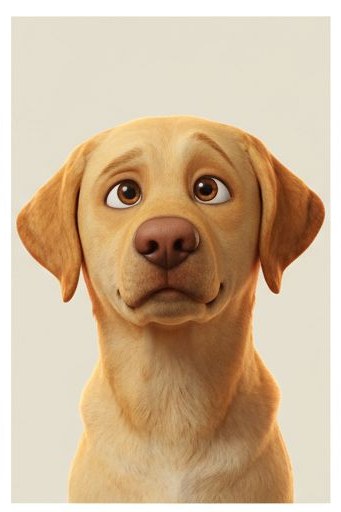
This is exactly the kind of specific, breed-shaped plan Pawsho builds from the problem you’re actually having.
When it isn’t working
Most stalls come down to a handful of fixable things:
- Someone is still rewarding the jump. The most common culprit. One person who greets an airborne dog undoes everyone else’s work. Re-brief the household and every visitor.
- You’re reacting to the jump. Pushing off, “off!”, eye contact — all attention. Go truly neutral: turn away, say nothing.
- The reward is too weak or too late. Pay the four-on-the-floor moment fast and with something your dog actually rates. A slow treat means you may accidentally reward the re-jump.
- You skipped the management step. If the dog keeps practicing jumping on surprise arrivals, the habit stays alive. Use the gate or lead until the new greeting is solid.
- Too much, too soon. Real front-door arrivals are the hardest version. If that’s where you started, back up to a calm helper indoors.
Breed, age, and size notes
- High-drive, social breeds (Golden and Labrador Retrievers, Boxers, German Shepherds) find greetings intensely exciting. Give them a job — a trained sit — and plenty of daily exercise, so they don’t arrive at the door with a full tank.
- Puppies learn this fastest because there’s no long habit to undo. Teach four-on-the-floor from day one, and never reward the cute puppy jump you won’t want from the adult.
- Small dogs get a pass far too often — a Pomeranian or Yorkshire Terrier jumping feels harmless, so it’s rarely trained out. But the same rule applies, and small dogs deserve the same clear boundaries. It’s also safer for them not to be underfoot at a busy door.
- Older dogs can absolutely learn this too; they may just need more reps to overwrite a long-standing habit. Consistency matters even more here.
When to get a professional
Jumping is a nuisance, not usually a red flag. But get help if:
- The jumping comes with growling, snapping, or stiff, fearful body language — that’s not friendly greeting and needs a qualified, reward-based trainer.
- The behavior appeared suddenly in a dog who never did it, or comes with other changes. Pain and illness can shift behavior, so a vet visit rules that out first.
- You feel out of your depth, or someone in the household is at risk of being knocked over. A large, bouncy dog around children or older adults is worth professional support early.
Frequently asked questions
How long does it take to stop a dog jumping?
It varies with the dog, their age, how long the habit’s been rehearsed, and how consistent everyone is. Puppies often shift within a couple of weeks of steady practice; a well-established adult habit takes longer. Consistency moves the needle faster than any single technique.
Should I knee my dog or push them off?
No. Kneeing, pushing, or shouting can hurt or frighten your dog, and to many dogs it still reads as attention — which can make jumping worse. Going boring (turn away, no words) and rewarding four paws down works better and keeps trust intact.
Why does my dog only jump on visitors, not me?
Because you’re always there and visitors are a novelty — arrivals are the peak-excitement moment. It also usually means guests are the ones accidentally rewarding it. Brief every visitor before you open the door: ignore the jump, greet only when all four paws are down.
Can I train this with an app instead of a class?
Yes, if you’d rather follow a structured plan at home. A good app turns your specific problem into daily steps — see our roundup of the best dog training apps of 2026 to find one that fits how you like to work.
A calm greeting is one of the first wins that makes everything else easier — and a dog who reliably keeps four on the floor is a dog you can take more places. Curious how your dog’s stage shapes what to train next? Check their real age on our size-aware dog age calculator, and keep building the habits that stay one step ahead of who your dog is becoming.