My Dog Ate a Turkey Bone: What to Do Right Now
Your dog just swallowed a turkey bone. Here's what actually happens next, the red flags to watch for, and when a cooked bone means calling the vet.
You turned your back for one second, and now the turkey carcass is on the floor and your dog looks very pleased with themselves. Your stomach drops. Cooked bones are the thing everyone warns you about — and now your dog has one inside them.
Take a breath. Most dogs who swallow a turkey bone pass it without drama. But cooked poultry bones are genuinely riskier than raw ones, and knowing what to watch for over the next few days is what keeps a scary moment from becoming an emergency.
This guide walks you through what happens after the gulp, which dogs are most at risk, what to do at home right now, and the specific signs that mean stop reading and call the vet.

What’s actually going on
The reason cooked bones worry vets isn’t the swallowing — it’s what cooked bone does inside the body.
- Cooking makes bones brittle. Cooked turkey bones dry out and splinter into sharp shards, and those splinters are the real hazard. Raw bones are more flexible and splinter less readily, but they are not harmless either — they carry their own risks, including bacterial contamination and cracked teeth on dense weight-bearing bones.
- The risks are mechanical, not toxic. A turkey bone won’t poison your dog. The concern is a shard scraping the throat, esophagus, stomach, or intestines — or a larger piece causing a blockage.
- Most of the time, it passes. Stomach acid softens bone over a day or two, and the majority of dogs move it through and out the other end uneventfully. You may see white, chalky, or crumbly stool for a couple of days. That’s normal.
- The trouble window is the next 72 hours. Problems usually show up as the bone travels — anywhere from a few hours (throat or stomach) to two or three days (intestines) after the meal.
So the honest answer to “can dogs have turkey bones?” is: they shouldn’t be given them, cooked ones especially. But if it’s already happened, your job now is calm observation, not panic.
A single swallowed turkey bone is usually a watch-and-wait situation — but “watch” is the operative word. The next three days matter more than the first three minutes.
Which dogs are most at risk
This is where your dog’s size and build change the whole picture. A turkey bone is a very different object inside a Chihuahua than inside a Labrador.
- Small and toy breeds — Chihuahuas, Yorkies, Pomeranians, Dachshunds. A bone that’s a minor snack for a big dog can be a genuine obstruction for a small one. Their narrower throats and intestines mean shards and fragments have far less room to pass safely.
- Fast, greedy eaters — Labradors, Golden Retrievers, Beagles, and any dog who inhales food without chewing. These dogs swallow large, jagged pieces whole, skipping the step that would break a bone into safer bits.
- Deep-chested breeds are a separate concern: gorging on a rich, bony meal can be one of the triggers for bloat, a true emergency in large breeds.
- Puppies and seniors handle both the swallowing and the digesting less reliably — puppies for their size, seniors for slower, more fragile digestion.
- Dogs with known GI sensitivity or a history of obstructions warrant a lower threshold for calling the vet.

If your dog is small, a fast gulper, or older, don’t wait as long to make that call. Knowing your dog’s breed and size is exactly the kind of context that changes the right response — the same reason a size-aware dog age calculator gives you a truer read than a generic chart.
What you can do at home right now
Assuming your dog seems fine — breathing normally, not choking, acting like themselves — here’s the safe sequence.
- Do a quick mouth-and-throat check. If your dog is pawing at their face, gagging, drooling heavily, or struggling to breathe, that’s a possible choke or a shard stuck in the throat — skip everything else and call the vet or an emergency clinic immediately.
- Don’t induce vomiting. Bringing a jagged bone back up the esophagus can do more damage than letting it pass. Never make your dog vomit unless a vet specifically tells you to.
- Ask your vet before feeding anything. Vets often suggest a small, soft, bulky meal — plain cooked rice or a slice of white bread — to cushion sharp edges and help the bone move along, which is the opposite of the “fast them” instinct many owners have. But make the call first: the right answer depends on your dog and what they swallowed, and normal dry kibble is usually the wrong choice for a day or two.
- Keep fresh water available. Hydration helps everything move smoothly.
- Note the time and what was eaten. How big the bone was, whether it was a whole drumstick or a fragment, and when it happened — all useful if you end up calling the vet.
- Watch the poop for the next two to three days. You’re checking that the bone comes out and looking for any blood. Chalky white stool is expected and fine.
- Keep them calm and quiet. No hard play or running for the rest of the day; let digestion do its work.
This home care is supportive — it stacks the odds in your dog’s favor. It is not a substitute for a vet’s judgment if something looks off.
When to see the vet
Here’s the line. Call your vet — or an emergency clinic if it’s after hours — if you see any of these:
- Repeated retching, gagging, or unproductive vomiting — a sign something may be stuck.
- Vomiting that won’t stop, or vomit with blood in it.
- Blood in the stool, black tarry stool, or straining and unable to pass anything.
- A hard, bloated, or painful belly, or a hunched, tense posture — in deep-chested breeds especially, this can signal bloat and is a true emergency.
- Drooling, pawing at the mouth, or refusing to swallow — a shard may be lodged in the throat or esophagus.
- Lethargy, hiding, whining, or loss of appetite that lasts more than a few hours.
- No bowel movement at all two to three days after swallowing the bone.
- Any small, toy, or senior dog where you’re unsure — err toward calling. The margin for error is thinner.
When you’re not certain whether what you’re seeing counts as a red flag, that judgment call is exactly where breed-aware guidance helps. Pawsho’s Ask screen weighs your dog’s actual breed, age, and size against the symptom instead of handing you generic web advice.
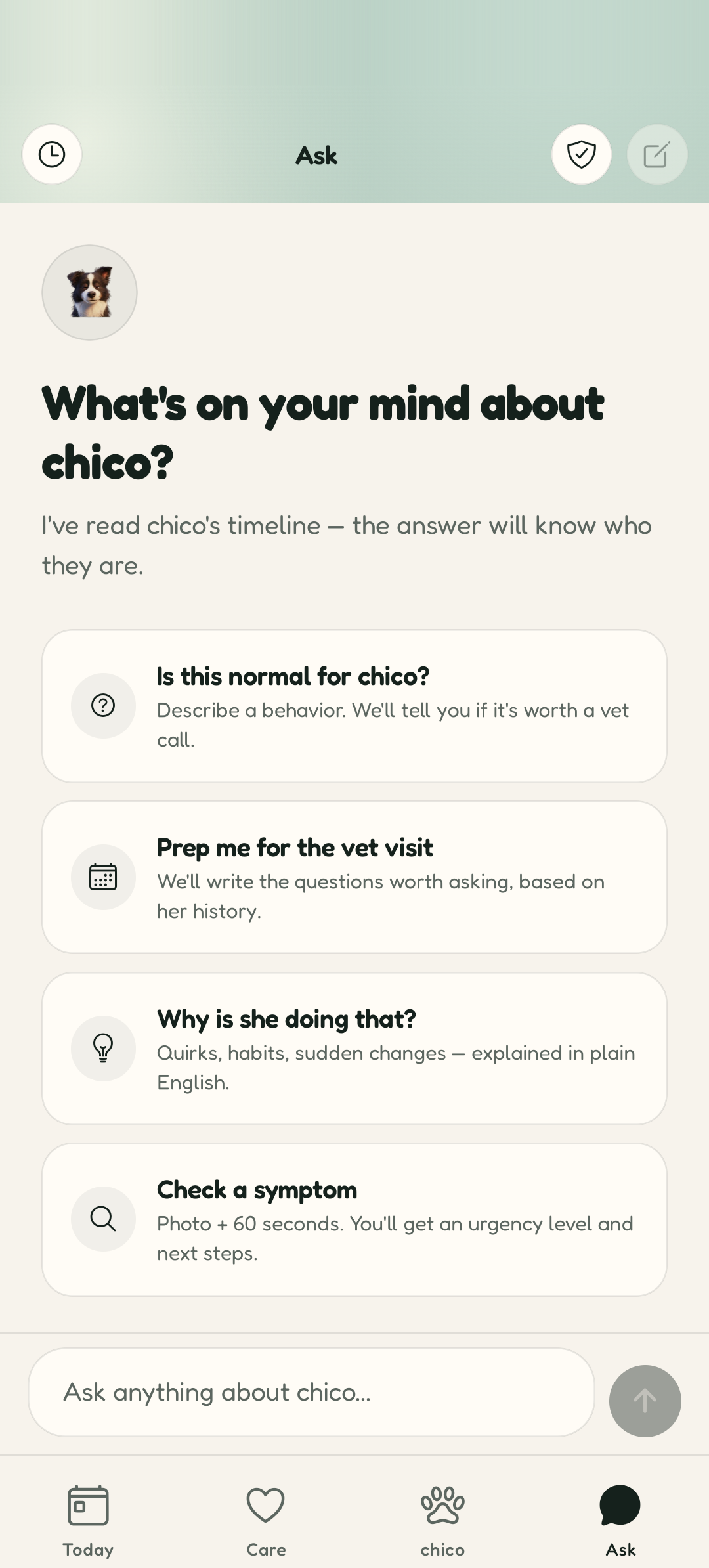
Trust your read on your own dog, too. You know their normal. A dog who’s quieter than usual, off their food, or just “not right” after eating a bone is worth a phone call, even if nothing on the list above is obvious yet.
Frequently asked questions
Can dogs have turkey bones at all?
Not safely — cooked ones especially. Cooked turkey bones splinter into sharp shards that can injure the mouth, throat, or gut, or cause a blockage. Raw bones are less brittle but carry their own risks. The safest answer is no: keep carcasses, drumsticks, and scraps well out of reach.
My dog ate a turkey bone and seems totally fine — do I still need to worry?
Probably not, but keep watching. Problems can take up to two or three days to appear as the bone travels through the gut. Feed a small soft meal, keep water available, and check the stool for the next few days. If anything on the red-flag list shows up, call your vet.
Should I make my dog throw up the bone?
No. Vomiting a jagged bone back up can tear the esophagus and do more harm than letting it pass. Only induce vomiting if a vet specifically instructs you to.
How long until the bone passes?
Usually within one to three days. You may notice white, chalky, or crumbly stool as it comes through — that’s expected. If your dog hasn’t passed anything or seems constipated after three days, check in with your vet.
Are small dogs really in more danger than big dogs?
Yes. A fragment that a Labrador passes without noticing can lodge in a Chihuahua or Yorkie’s narrower gut. If you have a toy or small breed — or a puppy or senior — treat a swallowed bone with more caution and a lower threshold for calling the vet.
The best moment to handle a turkey bone is before it’s on the floor — a lidded bin, a cleared counter, and a dog kept out of the kitchen while you carve. But scavengers are quick, and now you know how to read the next 72 hours instead of just holding your breath. For more everyday triage, see our guide on telling normal panting from concerning — staying one step ahead of your dog’s needs is the whole point.