Dog Dental Care: How to Keep Your Dog's Teeth Healthy
By age three, most dogs already have dental disease — and it's almost entirely preventable. Here's what actually works for your dog's teeth at home, which breeds are most at risk, and the warning signs worth acting on.
Dental disease is the single most common health problem in dogs — by some estimates over 80% have some form of it by age three. It’s also one of the most overlooked, because the early stages are invisible and the late stages get written off as “old dog breath.” Here’s the part worth sitting with: it’s almost entirely preventable, and the prevention takes minutes a week.
Why dog dental care matters more than you’d think
Bad breath is the symptom everyone notices. The real problem is underneath: plaque hardens into tartar, tartar inflames the gums, and infected gums become a doorway. Chronic dental infection doesn’t stay in the mouth — over time it strains the heart, kidneys, and liver, and it’s quietly painful long before a dog shows it. (Dogs are experts at hiding mouth pain; they keep eating because they have to.)
So dental care isn’t cosmetic. It’s one of the highest-leverage things you can do for your dog’s lifespan, and it costs almost nothing.
Which dogs are most at risk

Every dog needs dental care, but some are dealt a harder hand:
- Small and toy breeds — Yorkies, Chihuahuas, Dachshunds, Pomeranians, and Poodles. They carry a full set of 42 teeth in a tiny jaw, so crowding traps food and plaque. Dental disease often shows up years earlier than in big dogs.
- Flat-faced (brachycephalic) breeds — Pugs, Bulldogs, and French Bulldogs. Their compressed jaws push teeth into rotated, overlapping positions that are hard to keep clean.
- Seniors of any size — years of plaque add up, so the senior transition is a common moment for hidden disease to surface.
If you have a small breed, treat dental care as a core routine from day one — not something to start once there’s a problem.
Not sure which stage your dog is in? Our dog age calculator gives you their life stage by size in one tap, and our guide to when a dog becomes a senior covers what to start watching as they cross over.
What actually works at home
There’s a lot of marketing in the pet-dental aisle. Here’s the honest ranking:
- Brushing — the gold standard. Nothing beats mechanically removing plaque before it hardens. Use a dog-specific toothpaste (never human paste — xylitol and fluoride are toxic to dogs) and aim for a few times a week, ideally daily. Thirty seconds counts. Build it slowly: let them taste the paste, then a finger, then a brush, over days. It becomes a ritual faster than you’d expect.
- Dental chews and approved diets — a real help as a supplement, not a replacement. Look for the VOHC seal (Veterinary Oral Health Council); it’s the only independent proof a product actually reduces plaque or tartar.
- Water additives and dental wipes — modest, marginal help. Fine as extras; don’t rely on them.
- Raw bones and antlers — be cautious. Hard chews crack teeth, which is a common and expensive emergency. If it doesn’t flex a little, it’s a risk.
The warning signs worth acting on
Catch these early and most dental disease is reversible. Wait, and it means extractions:
- Persistent bad breath — the first and most reliable signal.
- Red, swollen, or bleeding gums.
- Yellow-brown tartar, especially along the gumline of the back teeth.
- Dropping food, chewing on one side, or sudden disinterest in hard treats.
- Pawing at the mouth or face-rubbing.
Professional cleanings: what to expect
Even with great home care, most dogs need an occasional professional cleaning. A proper one is done under anesthesia — that’s what allows the vet to clean below the gumline (where disease actually lives) and x-ray the roots. Be wary of “anesthesia-free” cleanings: they polish the visible surface and miss the part that matters. Ask your vet how often your specific dog needs one; small breeds often need them sooner.
Build it into the routine

The whole game with dental care is consistency, not intensity. A dog whose teeth get brushed for thirty seconds most days will almost always outlast one who gets an occasional heroic scrub. The hard part isn’t the brushing — it’s remembering, every day, amid everything else.
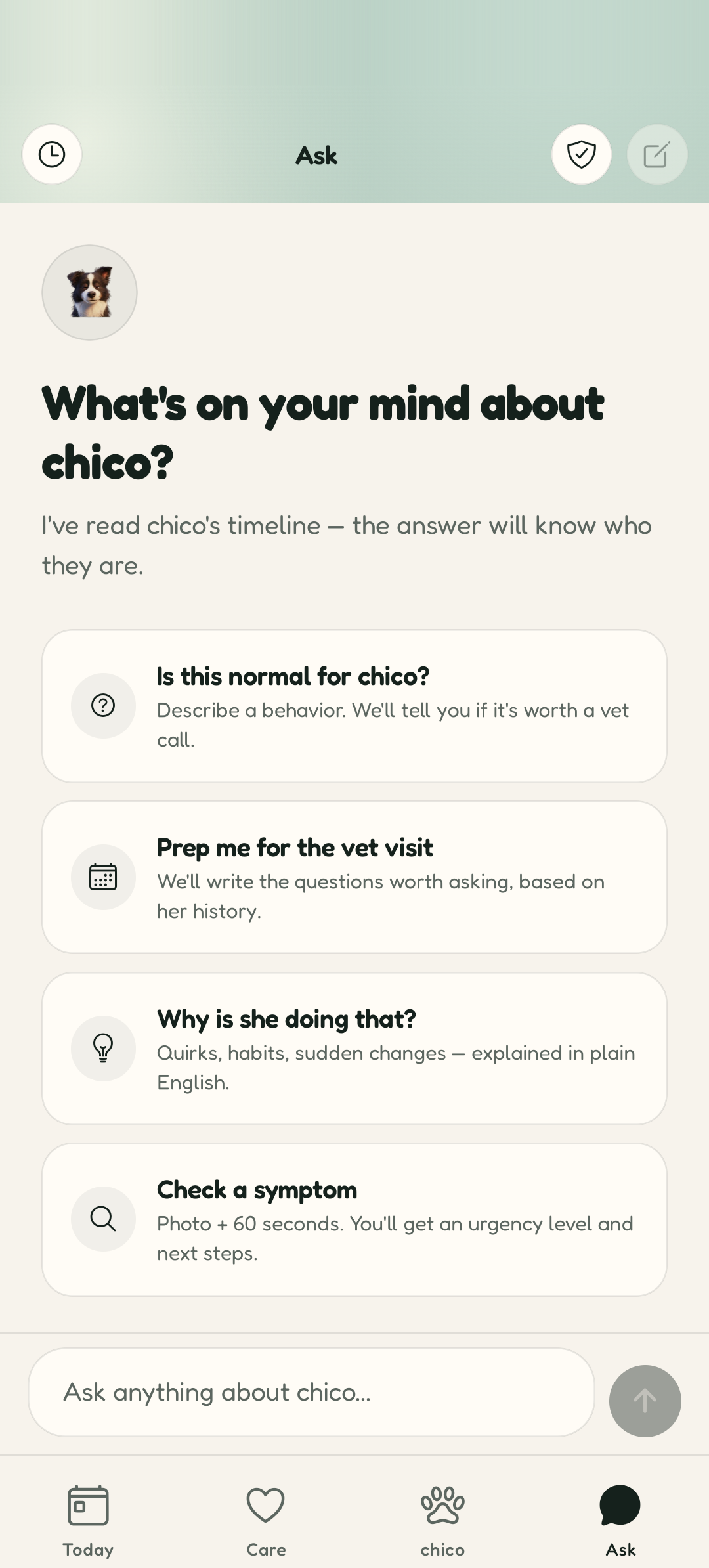
That’s exactly the kind of small, breed-aware habit Pawsho is built to hold for you: it knows a Yorkie needs dental attention sooner than a Lab, folds it into the daily care checklist, and nudges you before it becomes a problem — not after.
Pawsho turns your dog’s breed, age, and history into care that’s always one step ahead — from daily dental habits to the senior-health watchlist. The check-in takes five seconds. Get the app and meet your dog.