Potty Training a Puppy: A Step-by-Step Guide
Potty train your puppy the calm, reliable way: a scheduled routine, a cue word, rewards that land, and what to do when accidents keep happening.
There’s a particular kind of tired that comes with a new puppy and a floor you keep having to mop. You take them out, they do nothing, you come in, and then they squat on the rug. It feels like the message just isn’t getting through.
It is getting through — it just takes more repetition and a tighter routine than most people expect. Potty training is less about correcting mistakes and more about preventing them long enough for the right habit to stick. Set the schedule, reward the wins the moment they happen, and manage the gaps in between.
This guide gives you a routine you can start today, how to practice it, what to change when accidents keep coming, and how breed and size shift the timeline.
Why your puppy has accidents
A young puppy isn’t being defiant. Two things are working against them:
- The plumbing isn’t finished. Very young puppies have small bladders and limited muscle control. They physically can’t “hold it” for long, and the younger they are, the shorter the window.
- They don’t know where “outside” means yet. To your puppy, grass and carpet are just surfaces. The idea that one is for toileting and the other isn’t is something you teach, one rewarded trip at a time.
Puppies also give little warning. A sudden sniff-and-circle, wandering off mid-play, or heading to a spot they’ve used before is often all you get — and by then you have seconds, not minutes.
Before you start
Get these ready so you’re never scrambling:
- High-value treats, tiny and soft, kept by the door so you can reward outside within a second or two.
- A lead, so trips to the toilet spot stay focused rather than turning into a play session before the job’s done.
- An enzymatic cleaner for accidents. Ordinary household cleaner leaves a scent your puppy can still smell, which draws them back to the same spot.
- A way to manage the indoor gaps — a crate, playpen, or a small puppy-proofed room — for the times you can’t give full attention.
The one rule that makes all of this work: everyone in the house does the same thing. Same toilet spot, same cue word, same reward. If one person rewards outside and another lets accidents slide, your puppy gets a muddled message and progress stalls.
The method, step by step
- Pick one toilet spot outside. Take your puppy to the same place every time on the lead. The lingering scent tells them what they’re there to do.
- Add a cue word. As they start to go, say a short phrase — “be quick”, “go potty”, whatever you’ll remember — in a calm voice. Over time the cue itself starts to prompt the behavior.
- Reward the instant they finish, outside. Treat and quiet praise the moment they’re done, while you’re still out there. Rewarding once you’re back indoors teaches “coming inside pays”, not “going outside pays”.
- Supervise or confine indoors. When you can’t watch closely, use the crate or playpen. A puppy loose in the house with no eyes on them will find a quiet corner.
- Take them out on a schedule rather than waiting for a signal (more on timing below).
- Clean any accident with the enzymatic cleaner and move on. No scene, no telling off — just remove the scent so it doesn’t become a habit spot.
How to practice: the schedule
Frequency does the heavy lifting. Take your puppy out at every likely moment:
- After waking up — from overnight sleep and from every nap.
- After eating and drinking, which often gets things moving quickly.
- After play or excitement, and after any spell in the crate.
- On a rolling timer — often every one to two hours for a young puppy, then stretching out as they mature. Adjust to your puppy: some need trips closer together, others can wait a little longer.
Keep trips short and boring at first — out to the spot, cue, reward, back in. Save the walk or the games for after the job’s done, so toileting doesn’t get delayed by all the fun.
As the wins pile up, stretch the gaps between trips gradually and give a little more indoor freedom. Raise one thing at a time: either more time between breaks or more space, not both at once. Overnight, most puppies can hold on longer than they can during the day, and that window grows as they get older.
When it isn’t working
Most stalled potty training comes down to a handful of fixable mistakes:
- Rewarding late or indoors. If the treat comes after you’re back inside, the lesson gets lost. Reward outside, immediately.
- Too much freedom too soon. A puppy trusted with a whole room before they’re ready will have accidents in it. Tighten supervision and shrink their space, then rebuild.
- Skipping the enzymatic clean. Any leftover scent is an invitation to reuse the spot. Clean it properly.
- An inconsistent schedule. Missed trips after meals or naps set the puppy up to fail. Tighten the timing before you blame the puppy.
- Punishing accidents. Scolding, rubbing their nose in it, or any telling-off teaches your puppy to hide when they need to go — often behind the sofa — not to hold it. It makes things worse. Never punish accidents; just quietly reset and get the next trip out right.
Breed, age and size notes
- Small breeds often take longer. A Chihuahua, Yorkshire Terrier, or Pomeranian has a tiny bladder, so trips need to be more frequent and the whole process often stretches out over more weeks. Adjust your expectations and stay patient — it’s the plumbing, not stubbornness.
- Bigger breeds gain bladder capacity sooner, but a Labrador or Golden puppy is still a baby who needs the same frequent, rewarded routine early on.
- Younger puppies need shorter gaps. As a rough rule, the younger they are, the more often they go out; extend the schedule as they mature.
- Adopted or older dogs who were never house-trained learn the same way — the method doesn’t change, just the starting point.

Curious how your puppy’s stage compares? The size-aware dog age calculator shows how fast — or slowly — your breed matures, which is exactly what drives the potty-training timeline.
Prevent accidents long enough and the right habit forms on its own. You’re not correcting your puppy — you’re setting them up to get it right, over and over, until it’s second nature.
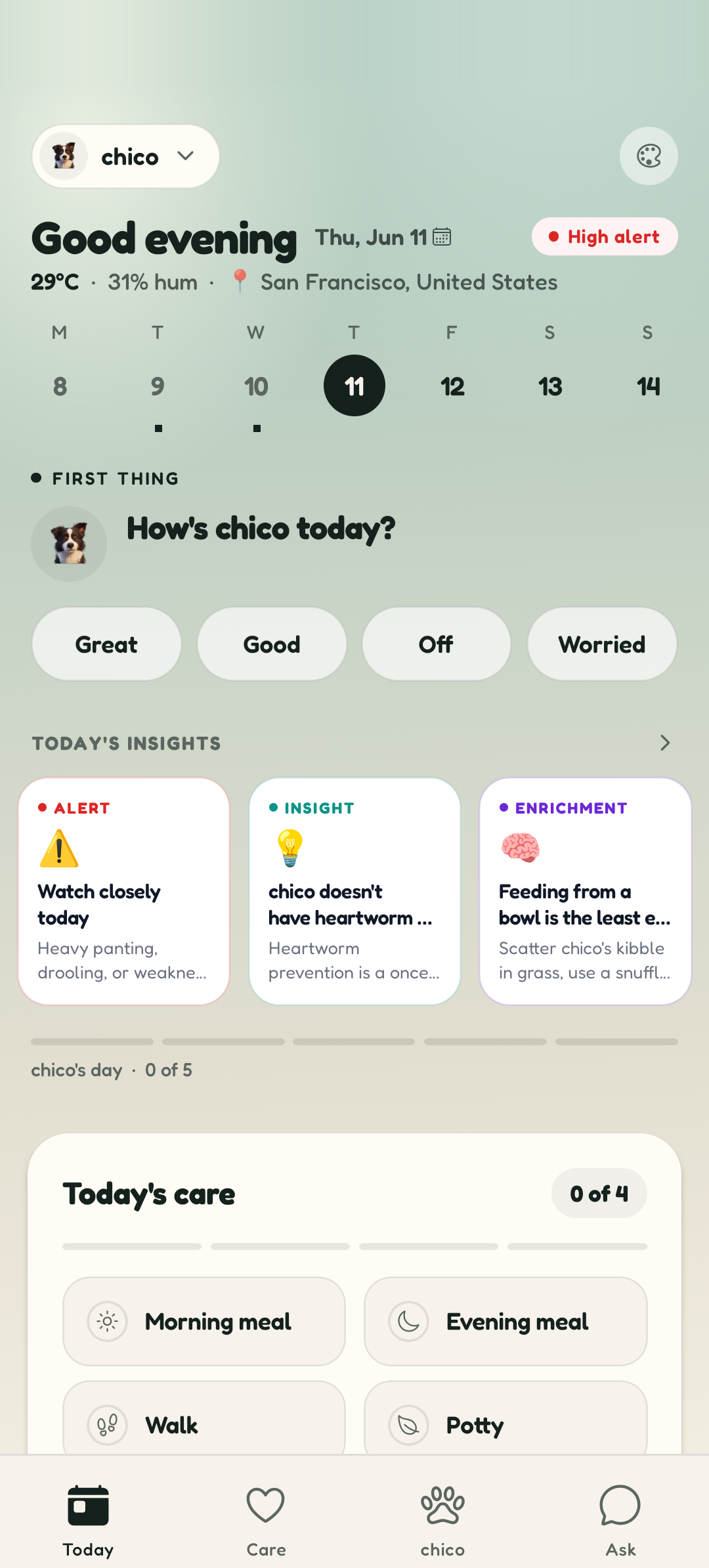
The hardest part of any routine is knowing what today’s step should be and adjusting when your dog isn’t getting it. That’s where a plan built around your puppy helps: you tell Pawsho what happened, and it shifts the next step to match.
When to get a vet or professional
Potty training is slow, but some patterns aren’t about training at all:
- A previously reliable dog suddenly having frequent accidents — worth a vet visit, as it can signal a urinary or other health issue.
- Straining, going very often with little result, or blood in the urine — see your vet promptly.
- No progress at all despite a consistent routine, or signs of fear around toileting — a qualified positive-reinforcement trainer can help you find the gap.
Pain and illness can look like a training problem, so rule those out before assuming it’s behavior.
Frequently asked questions
How long does potty training take?
It varies a lot. Many puppies get reliable over weeks to a few months with a consistent routine, but small breeds often take longer. Progress isn’t a straight line — expect good weeks and off days.
Should I use puppy pads?
They can help if you’re out for long stretches or live several floors up, but they also teach that going indoors is acceptable, which you’ll later have to un-teach. If your goal is outdoor toileting, taking your puppy outside from the start is the more direct route.
Why does my puppy pee right after coming inside?
Usually the trip out ended before they’d finished, or the reward happened indoors. Stay outside a little longer, and treat the moment they go outside — not once you’re back in.
Can I crate my puppy to speed things up?
A crate is a useful management tool, not a punishment. Most dogs avoid soiling where they sleep, so a correctly sized crate helps them hold on between trips. It should be a calm, positive space — never used to confine for long stretches or as a telling-off.
Is an app worth it for house training?
If you’d rather follow a structured, breed-aware plan than piece it together yourself, it can help you stay consistent. See our roundup of the best dog training apps of 2026 to compare your options.
Get the routine right now, while your puppy is small, and you’re not just clearing up accidents — you’re building the habits that keep you one step ahead of everything they’ll learn next.